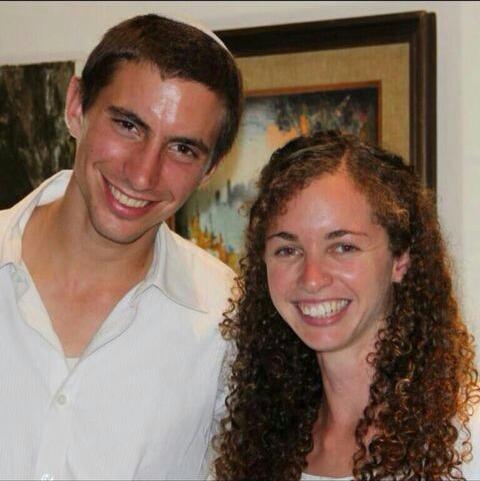
Showing posts with label Heroes. Show all posts

Monday, May 29, 2017

Memorial Day: Heroes And Hypocrites


Today is Memorial Day, a day when we honor men and women fallen in the service of their country.

Back when America was more of a piece, such a day was universal it what it meant. Oddly enough, the holiday itself started from division after the Civil War, a conflict over 600,000 Americans never returned from.

Southern women, putting flowers on the graves of their fallen also decided to decorate the graves of the fallen Union soldiers as well, and the custom spread across the Mason-Dixon line. From such a great,painful division came unity.

In America today, we are now in the midst of another great division. And increasingly, we lack the common bonds of our ancestors.

Let's examine something.

At the present time, we have a volunteer military. What that means is that some young men in our society made a choice to restrict their own freedom and risk their lives to defend the rest of us.Increasingly, there is a socioeconomic and geographical divide between those whom chose to serve and those who don't. In the past, most Americans knew someone who was serving or had served in our military...vets like Dad, your uncle or grandpa, somebody's niece or nephew, the neighbors kid or perhaps your own. That's no longer true.

The fact is, most self-styled progressives despise the sort of people who serve in our military. Oh, they'll pay lip service to 'supporting the troops' because, you know, it sounds patriotic and provides them a fig leaf, but the attitude is fairly obvious. A few Memeorial Days ago, MSNBC host and Nation editor Chris Hayes had this to say


CHRIS HAYES: Thinking today and observing Memorial Day, that'll be happening tomorrow. Just talked with Lt. Col. Steve Burke, who was a casualty officer with the Marines and had to tell people [inaudible]. Um, I, I, ah, [Steve] Beck, sorry, um, I think it's interesting because I think it is very difficult to talk about the war dead and the fallen without invoking valor, without invoking the words "heroes." Um, and, ah, ah, why do I feel so comfortable [sic] about the word "hero"? I feel comfortable, ah, uncomfortable, about the word because it seems to me that it is so rhetorically proximate to justifications for more war. Um, and, I don't want to obviously desecrate or disrespect memory of anyone that's fallen, and obviously there are individual circumstances in which there is genuine, tremendous heroism: hail of gunfire, rescuing fellow soldiers and things like that. But it seems to me that we marshal this word in a way that is problematic. But maybe I'm wrong about that.

To people like Chris Hayes, the people that go into the military are suckers and dupes, and more than one of his comrades on the left have shown that this is exactly how they see it...especially when they think no one's listening too closely.


Chris Hayes isn't alone. And people like him don't understand this. Not only don't most of them not know anyone who has ever served, but to them, it seems like anyone who would volunteer for the military is someone beneath them socially and intellectually,someone who had no other option. Especially for patriotic motives, which they also think of as borderline neanderthal. I mean, why would someone risk his life at minimal pay for such a deeply flawed country like America if they were, you know, smart?


Today, I saw photos of Bill and Hillary Clinton marching in a Memorial Day parade in their home town Chautauqua, New York. Since Mrs. Clinton and her friends are now preparing the ground for a 2020 run, I suppose they though it made good optics, you know. A nice photo op.

Just yesterday, an Obama-appointed judge threw a lawsuit out of court against Mrs. Clinton for willful negligence in the death of their sons by the Benghazi families. Judge Amy Berman Jackson set aside their claims that her use of an illegal private server to send confidential intel out unprotected helped cause the death of their sons. Not to mention ignoring repeated pleas for more security from Ambassador Stevens.

The judges verdict? That Mrs. Clinton's activities, even the clearly illegal ones were, and I quote "that Secretary Clinton was acting in the scope of her employment when she transmitted the emails that are alleged to give rise to her liability,”

And here you have these people marching and smiling in a Memorial Day Parade.

Our last president actually attempted to charge our wounded warriors for the medical care they were receiving for free via the VA. He also used there were the Obama Department of Justice to disenfranchise military votes overseas during the 2010 midterms.

And he further showed his feelings about the kind of people whom serve in our military by using dead military bodies being flown back to American soil as a political photo-op in defiance of Department of Defense regulations,the wishes of the families and simple common decency.

Yet in spite of all that, we still breed men here in America who answer the call of freedom. They understand something far more important than the contempt of the elites, and the smug platitudes uttered on this day. It is these men and women who define patriotism.

They knew that our beloved republic is worth fighting, and sometimes dying for. They put their lives on the line for our homeland. And they know how much many of us honor their bravery and sacrifice, even if it's s simple gesture like flowers on a grave. They showed up and gave their all. That's what we really honor on Memorial Day. And recent events may signify that we have indeed turned the corner as a nation, back towards the values we once held in common.

Those heroes, dead and alive will live forever in our hearts and always have our deepest gratitude and respect. The Chris Hayses, and their ilk never will.

Thursday, May 11, 2017

IDF Paratroopers Who Liberated Kotel In Jerusalem Return 50 Years Later

Hotovely with the 3 paratroopersי

According to Israel's Hebrew calendar, today marks the Jubilee celebration of Israel's Six Day War and the liberation of Jerusalem. Take a good look at the three men standing there, along with Israel's Deputy Foreign Minister Tzipi Hotovely, Dr. Yitzhak Yifat, Tzion Karasenti and Chaim Oshri.

they took a tour of the Old City as part of the festivities, retracing the exact steps these three men, then young paratroopers in the Tzahal took on that day, from the Lion's Gate until they reached the 2,000 year old stones of the Western Wall. They were the first Jews to stand before the Kotel in 19 years after Jordan seized it and ethnically cleansed every Jew from the Old City in 1948.

The picture they're holding is an iconic photo of these three men, taken originally by David Rubinger. They all signed it and gave the copy of it to Minister Hotovely. Here's a larger version of it:

 Image result for David Rubinger's picture of SOldiers at th ewestern Wall

When these men first saw the Kotel, it was not what is today. The Jordanians used it as a trash dump, and scribbled obscene graffiti on it. But the awe these three young soldiers had upon reaching it shows on their faces. Besmirched and vandalized, it was still the Kotel, the Western Wall. Afterwards, (and as some tell it, when there were still a few Jordanian snipers not yet dealt with) Chief IDF Chaplain Rabbi Shlomo Goren came to the Western Wall with Torah scrolls to thank G-d and blow the Shofar, celebrating the end of Israel's long exile from its holiest site.

 Related image

One of them, Tzion Karasenti expressed exactly what that meant to a crowd of foreign students from around the world studying in Israel at the Interdisciplinary Center in Herziliya and at Hebrew University, who were invited to come along and participate in the tour. He told the students that that the moment they reached the Western Wall in 1967 was the moment when the beating heart of the State of Israel was restored.

Deputy Foreign Minister Hotovely also had some remarks to make. She said that "the longing to reach the Western Wall, and the tears of the paratroopers who returned to the Western Wall after 2,000 years of prayer, are the best answer to those who are trying to sever the deep connection between the Jewish people and their capital."

"We are celebrating a great period," she added. "The unification of the city under Israeli sovereignty was the moment when every person of every religion could walk in Jerusalem. Our duty to liberate the city is to preserve a united Jerusalem and to strengthen its status so that the world recognizes Jerusalem as the capital of Israel."

This celebration comes  just days after UNESCO passed yet another anti-Semitic UN  Resolution trying to deny the Jew's claim to Jerusalem.

They simply don't get it. Jerusalem, especially the Old City is united with the Jewish people again. All the UN resolutions, hatred and sophistry Israel's haters can muster isn't going to change that. No threats are going todo that. No bogus offers of 'peace' and 'full relations' are going to change that, because the Israelis have already seen what that means. Fifty years is not such a long time in the almost 6,000 years of Jewish history. It is barely yesterday.

Jerusalem is now what it once was, the beating heart of Israel and the Jewish people, just as Tzion Karasenti said. With G-d's help and Israel's strong right arm, it will remain so.

Friday, August 21, 2015

USA! - Americans Foil Armed Jihadi On French Train


Troix Cow-boys américains rescousse de nouveau le jour!

At least that's what the French are saying about two Americans on a French train who took out an armed jihadi who was in the process of shooting it up:

A gunman opened fire aboard a high-speed train from Amsterdam to Paris on Friday, wounding at least three people before two American passengers subdued him, French officials said.

The Americans were not immediately identified, but France’s interior minister, Bernard Cazeneuve, said they “were particularly courageous and showed great bravery in very difficult circumstances.’’

Capt. Jeff Davis, a Defense Department spokesman in Washington, said that an American military member was on the train and had been wounded in the episode. He said Pentagon officials had not yet confirmed the name or rank or service, or whether the second American also was a service member.


The jihadi, whom the New York times referred to below the fold as "described by French officials as a 26-year-old of Moroccan origin armed with an automatic weapon and a knife" began shooting up the the Amsterdam to Paris express in the northern French city of Arras, which may ring some bells for veterans of two World Wars. Their blood is part of that soil.

The two Americans didn't hesitate for a second. They jumped the armed jihadi with their bare hands, subdued him and held him until the French authorities arrived to collect him. If not for them, the casualty list would have been far higher.

It is a mark of our times that this story of American heroism is relegated to the back pages of Pravda-on-the-Hudson rather than meriting a front page spot. Frankly, I'm surprised they published it at all.

In France, it's headlines.

UPDATE: According to CNN and the Daily Mail, the two Americans were members of the U.S. Marines. They rushed the jihadi when they recognized the sound of him loading his Kalashnikov rifle. One of them was wounded subduing the gunman.

French authorities found 9 magazines of ammo on the train,holding almost 300 rounds. The jihadi also had a knife and a handgun. The train had 550 passengers on board, and there's no doubt that if it were not for these two Marines, a massacre would have occurred.

Correction and UPDATE: CNN had it wrong as usual. The LA Times and the UK Independent are reporting that the Americans were U.S. military on leave, Spencer Stone,an Air Force paramedic, and Alek Skarlatos, a U.S. soldier fresh from a tour of AfPak and a friend of theirs from Sacramento California where all three grew up, Anthony Sadler.

Not only did they subdue the would-be killer, but Stone saved one man's life in spite of being badly injured himself by stopping the bleeding from the man's throat which had been slit.

The jihadi, now identified as Ayoub el Khazani was actually on a terrorist watch list with French security.

Wednesday, November 19, 2014

Thousands Of Israeli Jews And Druze Honor Heroic Slain Druze Policeman

Thousands at Sif's funeral (Photo: Avihu Shapira)

Master-Sergeant Zidan Saif,(HY"D) the Druze policeman who died from wounds sustained in yesterday terrorist attack on a synagogue was laid to rest today, accompanied by thousands of Israelis, both Jews and Druze.

Israeli President Reuven Rivlin was among the mourners.

"To the Saif family - I stand in front of you shaken and pained," he said. "Terror has struck Jerusalem once more. Terror that does not distinguish between people. Terrorists turned a house of prayer into a house of slaughter. Your son did not hesitate or waver . . . He stood fearlessly against the terrorists and risked his life to protect the people of Jerusalem.

"He acted according to the values he was raised with - courage, heroism, and self-sacrifice." Rivlin concluded his euology on a personal note. "What will we tell a five-month-old baby who will never know her father, who has been orphaned? We will tell her that her father was a hero."

Saif is the second Druze policeman who has been murdered by  Palestinian terrorists in recent days. The first,  Border Police officer Jedan Assad (HY"D, May G-d avenge his blood) from Beit Jann was murdered by a Palestinian terrorist who used his van to attack a crowd of people waiting at a light rail station.

The Druze are Arabs but not Muslims, whose prophet is Yithro(Jethro). They had always had peaceful relations with the Jews, and during Israel's War of Independence in 1948  they remained neutral, neither attacking the Jews or fleeing.

Like all Arabs who chose to remain in Israel after the war, they became full citizens, but insisted on being subject to Israel's compulsory military service. Like many other Arabs in Israel, they serve with distinction and courage in the IDF and Israel's other security services...because they know that Israel is their country too, and are willing to shed their blood in her defence.

Tuesday, November 11, 2014

The Day The World Stopped


 http://c.tadst.com/gfx/600x400/remembrance-day.jpg?1

In Flanders Fields the poppies blow
Between the crosses row on row,
That mark our place; and in the sky
The larks, still bravely singing, fly
Scarce heard amid the guns below.

We are the Dead. Short days ago
We lived, felt dawn, saw sunset glow,
Loved and were loved, and now we lie
In Flanders fields.

Take up our quarrel with the foe:
To you from failing hands we throw
The torch; be yours to hold it high.
If ye break faith with us who die
We shall not sleep, though poppies grow
In Flanders fields.


- Lt. Colonel John McCrae, Canadian Army Medical Corps(1872-1918)

The poem above is a product of World War One, the great scar of history that changed the world and differentiated between ages. As you can tell by the dates, the writer became one of the millions who died in the carnage.

96 years ago today, November 11, 1918 started out as a day like any other day. Men sat in their trenches, looking at each other over the blasted and tormented ground that was No Man's Land where so many of their comrades had fallen, where the very earth was gorged with blood and pain.

According to the accounts of those who were present, there was no air of celebration. The orders had come through that the Great War was to end on November 11th, 1918 at precisely 11 AM local time, the 11th hour of the 11th day of the 11th month, but many of the soldiers refused to believe it, thinking it was a trick to lure them into exposing themselves to enemy fire.

The gods of war held sway until the last minute. Among the soldiers of the British Commonwealth,there are 863 who are recorded as having died on that November 11th. The constant din of machine guns, cries, small arms fire and artillery continued.

Colonel Thomas Gowenlock, who served as an intelligence officer in the American 1st Division was in the trenches that day.The orders had come through, but no one was completely certain they would be obeyed by either side, or that the armistice would last:

Official Radio from Paris - 6:01 A.M., Nov. 11, 1918. Marshal Foch to the Commander-in-Chief.

1. Hostilities will be stopped on the entire front beginning at 11 o'clock, November 11th (French hour).
2. The Allied troops will not go beyond the line reached at that hour on that date until further orders.
[signed]
MARSHAL FOCH
5:45 A.M.


Colonel Gowenlock wrote later that he drove over to the bank of the River Meuse to see if the war would really end. He wrote later that even with the orders for an armistice, the shelling was heavy on both sides.

"It seemed to me that every battery in the world was trying to burn up its guns. At last eleven o'clock came - but the firing continued. The men on both sides had decided to give each other all they had-their farewell to arms. It was a very natural impulse after their years of war, but unfortunately many fell after eleven o'clock that day."

"...at the front there was no celebration. Many soldiers believed the Armistice only a temporary measure and that the war would soon go on. As night came, the quietness, unearthly in its penetration, began to eat into their souls. The men sat around log fires, the first they had ever had at the front. They were trying to reassure themselves that there were no enemy batteries spying on them from the next hill and no German bombing planes approaching to blast them out of existence. They talked in low tones. They were nervous.

After the long months of intense strain, of keying themselves up to the daily mortal danger, of thinking always in terms of war and the enemy, the abrupt release from it all was physical and psychological agony. Some suffered a total nervous collapse. Some, of a steadier temperament, began to hope they would someday return to home and the embrace of loved ones. Some could think only of the crude little crosses that marked the graves of their comrades. Some fell into an exhausted sleep. All were bewildered by the sudden meaninglessness of their existence as soldiers - and through their teeming memories paraded that swiftly moving cavalcade of Cantigny, Soissons, St. Mihiel, the Meuse-Argonne and Sedan.

What was to come next? They did not know - and hardly cared. Their minds were numbed by the shock of peace. The past consumed their whole consciousness. The present did not exist-and the future was inconceivable." *


We, who have grown up with the memory of wars like Vietnam with its 50,000 dead and Iraq with its 4,000 can barely conceive of what 5 years of total, merciless war was like. A whole social order overturned and a generation literally cancelled out, with over one million dead from the British Commonwealth and Empire, almost a million and a half Frenchmen, over one hundred thousand Americans and over 2 million Germans - something like 10 million military dead on both sides, and probably 6-7 million civilians who joined them.

It was a horror so complete that for the men who fought it, it became a way of life to the point where many of them had difficulty adjusting to any other, even if they survived.When the guns stopped it was as if the world had stopped.

And yet, as Lt. Colonel McCrae's poem tells us, that sacrifice was not meaningless. And today is a day to remember that.

In Canada, where Veteran's Day is called Remembrance Day, there was a special ceremony.


In Britain and Australia, Canada and other Commonwealth countries, today is known as Remembrance Day, a name that dates from the Great War so many never came home from. The red poppies, mentioned in Lt. Colonel McCrae's poem are a symbol worn by millions - to remember.

Today, Canadians rededicated their memorial to those whom fell in the Great War in honor of Cpl. Nathan Cirillo and Warrant Officer Patrice Vincent, who were casualties of a newer war..one as yet undeclared, but no less of a sacrifice for freedom.

The Canadians are not the only ones who have lost men and women to this undeclared war that, at least here in America, doesn't dare speak its name..not yet. Instead, there are attempts to hide it behind names like 'workplace violence.'


There are defining moments in history. Sometimes, many of the men and women involved in them are aware of it as much as those whom come after them. Others remain unseeing of what is unfolding, and it is only revealed to them later.

We are in the middle of such a defining moment, whether we realize it or not.


 Just like World War One, it has crept up on us while many of us have remained almost unconscious of it. But periodically, almost against our will, we are reminded that freedom has a price. And that price - sometimes the ultimate price-is paid by those willing to pick up the gun and defend it.


That's what we should appreciate today...that there are still such men and women among us who will make that sacrifice. Lt. Colonel McCrae understood that, and his poem speaks to all of us across the ages:

 Take up our quarrel with the foe:
To you from failing hands we throw
The torch; be yours to hold it high.
If ye break faith with us who die
We shall not sleep, though poppies grow
In Flanders fields.


If we break faith with those who have sacrificed everything, if we refuse the torch, we shall lose everything they paid the ultimate price to preserve. And beyond that it will be a shame that will haunt us and forbid us rest in our own graves.


* Thomas R.Gowenlock, Soldiers of Darkness (1936)

Sunday, August 03, 2014

Israeli Soldier Feared Kidnapped By Hamas Declared Dead

A coffin being carried at Hadar Goldin's funeral Sunday, August 3, 2014. (photo credit: Yonatan Sindel/Flash90)

The IDF has determined that Lt. Hadar Goldin,(HY"D) who was feared kidnapped by Hamas was in fact killed in action. The IDF confirmed the death by checking the DNA of parts of his body that were found in the tunnel used to attack his unit.

Goldin went missing in action on Friday following a deadly ambush by Hamas fighters that killed two other soldiers. The ambush came an hour and a half into an agreed upon 12 hour humanitarian ceasefire.

 View image on Twitter

Lieutenant Colonel Peter Lerner told the AFP Goldin had been identified by exhaustive DNA tests of body parts found in the tunnel.

“What we know for sure was that one suicide bomber and at least three or four other gunmen came out of a tunnel.

“One blew himself up, killing two on the spot, and the others were shooting — they grabbed Hadar and snatched him down into the tunnel,” he said.

“We don’t know if he was alive and wounded, or dead at this time. Only in the aftermath, with the forensic investigation, were we able to conclude that he was killed,” he said.

Remains of Goldin’s body were discovered inside the tunnel east of Rafah where the confrontation took place, Lerner said.


“He was identified by his DNA,” he told AFP, saying what they found proved he was dead, not being held by a militant group.

“There was enough to determine that he had been killed and to carry out a burial.”


Lt. Hadar Goldin was buried today in his home town of of Kfar Saba near Tel Aviv.

The family of Hadar Goldin at his funeral Sunday August 3, 2014. (photo credit: Yonatan Sindel/Flash90)

Sunday, July 27, 2014

Major Fatah Terrorist Attack On Jerusalem Averted

pal media watch big explosion

Tawfiq Tirawi is the Palestinian Authority's Intelligence Chief and a Fatah Central Committee member. On July 24th. He was on Lebanese TV taking about Fatah attacks on Israel and saying there was going to be 'a big explosion.' Per PMW:

“These are small explosions, which happen occasionally, but the big explosion is coming. The big explosion is coming. After the big explosion, no one will know where it will lead and what its results will be…It is legal to use all means – to shoot, throw stones, to hold a demonstration and a sit-down strike. All these means will be possible and permissible for our people, and let no one say that weapons are forbidden in the West Bank.”


Today, A car loaded with gas canisters and a large explosive charge was stopped by the border police on its way to Jerusalem at the Beitar Ilit checkpoint 6 miles southeast of the capital. Its Palestinian driver approached the checkpoint at a faster than normal speed which tipped off the border police.

When he was ordered to stop, he tried to keep on driving, but one heroic border policeman, Officer Yeshuron Tzoran, jumped inside the vehicle, attempted to shut the engine off himself and finally got the driver to stop by pulling his weapon on him and threatening to shoot him.

The man was arrested and handed over to the Shin Bet General Security Service for questioning. Inside his car officers found pipe bombs, gas canisters, explosives, and detonators, according to a statement put out by the IDF after the incident. The officer who arrested the man said the back seats of the car had been removed and the entire area was full of gas canisters rigged with electric wires.

The incident caused massive gridlock as police shut down traffic in both directions from the junction in order to send in sappers to handle the explosives.

At the moment it's unclear where the man was taking the explosives, though one working assumption is that they were meant to be used for a terror attack in Jerusalem.

The officer who stopped the suspected bomber, Inspector Yeshuron Tzoran, described how he and the other officers in his region have been instructed to be on high alert during the IDF operation in Gaza due to the assessment that terror groups will try to carry out an attack in Israel. Therefore they set up the temporary checkpoint and began stopping cars. On Sunday afternoon Tzoran said he "couldn't feel better, we feel that we saved many lives in Israel and this is our duty."


 http://www.jewishjournal.com/images/articles/isr_hebron_soldiers_reuters_04032012-584.jpg

It's excellent that the driver was taken alive. He was obviously delivering this car bomb and the explosives to someone. The Shin Bet will find out whom they are, believe me.

But if you look at the juxtaposition of Tawfiq Tirawi's boast on Lebanese television and this event, it's obvious they're connected. This is the Third Intifada and Fatah is an active participant.

Wednesday, July 23, 2014

The War Against Hamas, Day 15

 http://www.jpost.com/HttpHandlers/ShowImage.ashx?ID=207689

The IDF continues to strike back at Hamas.

There were several reports of a 'humanitarian ceasefire' in the making that was scheduled to begin at 10 AM local time, but Hamas made so many ridiculous demands that if never came off.

There was also some apprehension that Hamas may have captured an Israeli soldier, but Sergeant Oron Shaul, a combat soldier of the Golani brigade, 21 years old from Poria has now been accounted for as a KIA (HY"D). Apparently Hamas merely recovered some of his documents.

The UN's pro Hamas/Fatah Secretary General Ban ki-Moon met with PM Netanyahu today to whine about Hamas civiian casualties while saying nothing about his Hamas friends violating the Geneva Accord they just joined with Ban's help by using civilians as human shields, storing armaments in UNRWA facilities, and targeting civilians in Israel. PM Netanyahu had a few things to say to him, after showing Ban the steps the IDF ( unlike Hamas) is taking to avoid civilian casualties (emphasis mine):

 https://meashearim.files.wordpress.com/2014/07/10451724_10152095276426735_3700621647038005966_n.jpg

Mr. Secretary, I appreciate the fact that you came here and that you took time to see what we’ve just shown you. I think it’s clear that Israel is doing what any country would do if terrorists rained down rockets on its cities and towns – hundreds of rockets, day after day, week after week. In addition, as I’ve shown you, Hamas has dug terrorist tunnels under hospitals, mosques, schools, homes, to penetrate our territory, to kidnap and kill Israelis.

Now, in the face of such wanton terrorism, no country could sit idly by. It would exercise its right, inherent and legitimate right of self-defense as we are doing, and act decisively to end the threat to its citizens. This is what Israel is doing. We did not seek this escalation, Mr. Secretary. We accepted the Egyptian ceasefire proposal. I don’t need to remind you it was a proposal that was supported by the UN, by the Arab League, by the United States, by Europe. Hamas rejected it. We accepted the humanitarian ceasefire proposal that the UN proposed afterward. Hamas rejected that. We accepted the ceasefire proposal of the Red Cross in Shejaia. Hamas rejected that, twice. I think the international community must take a clear stand; it must hold Hamas accountable for consistently rejecting the ceasefire proposals and for starting and prolonging this conflict. The international community must hold Hamas accountable for its increasing and indiscriminate attacks on Israeli civilians. And the international community must hold Hamas accountable for using Palestinian civilians as human shields deliberately putting them in harm’s way, deliberately keeping them in harm’s way.

Mr. Secretary, we have made every effort and will continue to make every effort to avoid civilian casualties. We are targeting Hamas terrorist targets. We’ve just shown you these targets, embedded in civilian areas, embedded in mosques, embedded in hospitals, embedded in agricultural schools. Hamas is embedded in there in order to sustain civilian casualties, because they know that we will have to protect our citizens; that we have to act against their targets. So they are committing a double war crime: both targeting our civilians and hiding behind their civilians. And they want, I repeat: They want more civilian casualties, whereas we want no civilian casualties at all, and we’re taking the utmost pain to minimize that. I think the people of Gaza, and that’s become absolutely clear to the world, are the victims of the brutal Hamas regime. They are holding them hostage and they are hiding behind them.

You know, Mr. Secretary, the international community has pressed us to give cement to Gaza to build schools, hospitals, homes. And now we see what has happened to those deliveries of cement. They have been used to dig tunnels next to a kindergarten, not to build a kindergarten but to build a tunnel that penetrates our territory so that Hamas can blow up our kindergartens and murder our children. They’ve used for a long time our willingness to try to keep civilians at a minimum. They’ve been using them to keep on firing at us. We have even opened up a field hospital, Mr. Secretary, to help Hamas civilians, and Hamas is preventing civilians of Gaza from going to our hospital. I believe that you understand this. I believe that you understand that it is the right of every state to defend itself. And Israel will continue to do what it needs to do to defend its people.

Mr. Secretary, this is not only our right; this is our duty.


So far, Bibi Netanyahu is standing up to cretins like Ban. Let's hope it continues.

Here's the IDF's own summary of today's events:

Since the beginning of the ground phase of the operation, the IDF has targeted over 1,800 terror sites. Over the course of the day the IDF has targeted approximately 260 terror activity sites in Gaza. Among the targets were military posts, concealed rocket launchers, weapon manufacturing facilities and military command centers. IDF soldiers uncovered thus far approximately 30 offensive tunnels and 66 access points.

2,160 rockets have been fired at Israel since the beginning of Operation Protective Edge, 420 of them were intercepted and some 1,700 hit Israel. Today, 87 rockets were fired at Israel, 18 of them intercepted and 67 hit Israel.

This morning, militants fired anti-tank missiles from within a mosque at IDF soldiers in Khan-Yunis. In response, IAF aircraft targeted the mosque, identifying a hit. Staff Sergeant Avitar Moshe Torjamin was killed and several soldiers were wounded in this incident.

In a separate incident, terrorists fired anti-tank missiles at IDF soldiers in Khan-Yunis. The soldiers responded with fire and killed 4 terrorists.

Around noon, IDF soldiers uncovered 3 tunnel access points in the northern Gaza Strip.

Later today, elite unit soldiers uncovered a cache of ammunition in the central Gaza Strip. The ammunition included anti-tank missiles, heavy machine guns and AK- 47 assault rifles.

Recently, 2 terrorists opened fire at IDF soldiers who responded to the threat and killed them.


The IDF thus far has lost 29 of its soldiers in the war against Hamas. The Hamas toll is well over 600,and contrary to what you're hearing the majority of those deaths are combatants.

Today was also the day the U.S. and a number of EU carriers suspended service to Israel after a Hamas rocket damaged a house a mile from Tel Aviv's Ben Gurion airport. As I wrote earlier this is sheer nonsense that gives Hamas a prize for attacking Israel, just like the $47 million President Obama and Secretary John Kerry have pledged to gift them with. They're not pledging any finds for rebuilding anything in Israel hit by Hamas rockets, of course.

One can only wonder what the reaction of Hamas/Fatah would be if President Obama said flat out that if they launched any more rockets at Israeli civilians, U.S. financial support would rend immediately. Of course, we don't have that kind of president in the White House, although the Canadians certainly have that kind of PM in Ottawa.

Of all people, former NY mayor and billionaire Michael Bloomberg slammed the FAA ban on U.S carriers flying to Israel and is on his way there via El Al. You have to give him credit.

And speaking of real heroes...The commander of the IDF’s Golani Brigade, Raslan Alian, was wounded on Saturday night. He's the highest ranking Druze in the IDF. He insisted on returning to his men in Gaza on Tuesday to finish the mission, with the scars of battle still evident on his face:


The motto of the Tzahal commanders? 'Follow me.'

In other tidbits, more Hamas rockets were found stored in UNRWA facilities, which of course UNRWA claims to know nothing about. Just like the last batch that was found, UNRWA will hand the latest batch to Hamas to fire against Israeli civilians.

Such people do not even merit contempt. They're simply cockroaches in human form.

Here's hoping that when this is all over, Israel expels UNRWA, never to return.

Monday, July 21, 2014

Watch 72-year-old Buzz Aldrin Punch Out Someone Calling Him A 'Liar' And Coward'


Today was the the 45th anniversary of the lunar landing..but 'truthers' exist that claim it never happened.

Back in 2002, one of them, Bart Sibrel ambushed the then 72-year-old Buzz Aldrin, the second man to walk on the moon outside a Los Angeles hotel.Sibrel openly harassed this American hero, tossing numerous insults, including calling the old astronaut a 'liar and a coward.'

Big mistake. After Aldrin repeatedly asked him to take a hike...well, watch.

It'll make you smile.

Edwin 'Buzz' Aldrin Jr. is still with us today, at the ripe old age of 84.

Oh, and the police? They declined to press any charges.

Sunday, June 15, 2014

One For Father's Day..And The Second Amendment


At a time when many children are growing up without fathers due to certain societal changes and of course, the lawyers and the courts, it's well to reflect on one vital function of fathers that these so-called 'feminists' seem to have forgotten in the zeal of conducting the War on Men....that their traditional role was to protect young females in their family from predators.

At about 11 PM last Monday, a 17-year-old girl was getting something from her car parked in front of her house, where she lives with her mother. As reported by Fox2News in St. Louis, two men, both with guns, grabbed her and began to push her back into the home with a gun to her head. They were obviously after a quick and easy home invasion, with the brutal rape of a young girl as an added bonus.

Unfortunately for them, her father, who does not live with his daughter or the girl's mother was visiting right around that time and was strapped.

He didn't dither or delay...his protective instincts kicked in, he pulled his own gun, shot and killed one perpetrator and severely injured the other.

He says he had no choice but to fire. “He was holding her hostage. She was a human shield. So I did what I had to do.”

When the reporter asked him how he had the confidence to pull the trigger when the man was holding his daughter, he said, “It wasn’t like that. It just happened. I didn’t have no choice. He had my daughter so I did what I had to do.”

Oh, and the two perps? Terrell Johnson, who no longer will hurt anyone else and Cortez McClinton, who was wounded were both career criminals. Johnson had a long rap sheet and had served time in the Missouri prison system for armed robbery. Ditto for McClintock, who had already been charged with one murder back in 2010.

I have a feeling President Obama will not be commending this man. Nor will gun confiscation fascists. But imagine what would have happened to the girl , her mother and the father if he hadn't been armed. By the time the police were able to respond, the bleeding bodies on the floor would have belonged to different people.

And there is this. Here's a man who is estranged from his wife and almost certainly doesn't see his daughter as much as he wants to. Yet the bond was so strong that he didn't hesitate risking his life to try and save hers. And he continues to give her an example of masculine behavior and what to look for in a potential husband and father herself when the time comes.

The man wisely insisted on not being identified by the reporter to avoid possible retribution at the hands of some of the perp's friends, but he deserves a shout out on Father's Day. He exemplifies a big part of what it's about.

Wednesday, June 11, 2014

Anniversary Of A Miracle - Israel's Victory In The Six Day War


Today is the anniversary of a modern miracle, the Israeli victory of the Six Day War, מלחמת ששת הימים, or Milhemet Sheshet Ha Yamim in Hebrew. It saw an outnumbered Israel beat back an attempt at destruction and genocide, reunite Jerusalem, bring the strategic Golan and the historic Jewish homelands of Judea and Samaria back under Israeli sovereignty. It's worth recounting 47 years later, when Israel's mortal enemies once again gather to attempt to destroy her.

Egyptian leader Gamal Abdul Nasser had formed a military alliance with Syria, the United Arab Republic (UAR) and with the aid of the Soviet Union, both countries had built up a substantial military force, vastly outnumbering Israel in tanks, planes and manpower.

After the 1956 war,the Israelis had agreed to withdraw from Sinai based on President Eisenhower's guarantees that provided for a UN peacekeeping force to be stationed there to prevent feydayeen terrorist raids on Israel, the main cause (at least from the Israeli standpoint) of the '56 war.

Another part of the ceasefire agreement that ended the 1956 war concerned the Straits of Tiran, a waterway connecting the Gulf of Aqaba and the Red Sea and Israel's sole Red Sea outlet for the port of Eilat.


According to the ceasefire ratified by the UN, the Straits of Tiran were to be considered an international waterway with full access to Israeli shipping.

On May 17th, 1967, after a huge amount of rhetoric about annihilating every Jew in Israel, Nasser demanded an immediate withdrawal of the UN peacekeeping troops from the Sinai. Secretary General U Thant immediately complied in less than 24 hours without informing the Israelis until Egyptian forces had already reentered the Sinai.

Nasser subsequently deployed a huge force of troops,tanks and artillery in the Sinai. The Egyptians massed over 100,000 troops in the Sinai, including all of its seven divisions (four infantry, two armored and one mechanized), four independent infantry brigades and four independent armored brigades. At least one third of them were veterans of Egypt's intervention into the Yemen Civil War, and the Egyptian forces included 950 tanks, 1,100 APCs and more than 1,000 artillery pieces, many of them of the latest Soviet models.

On May 23rd, Nasser announced a blockade of the Straights of Tiran, saying in a speech to his troops in Sinai:


... Yesterday the armed forces [of Egypt] occupied Sharm el-Sheikh. What does this mean? It is an affirmation of our rights, of our sovereignty over the Gulf of Aqaba, which constitutes Egyptian territorial waters. Under no circumstances can we permit the Israeli flag to pass through the Gulf of Aqaba. The Jews threaten war. We say that they are welcome to war, we are ready for war, our armed forces, our people, all of us are ready for war, but under no circumstances shall we abandon our rights. These are our waters ...


At the same time, the Syrians began massing 75,000 troops, artillery and armor on the Golan Height to the north of Israel, where they held the high ground and were dug in.

Jordan, to Israel's east signed a mutual defense pact with the UAR on May 30th and moved 55,000 troops and 300 tanks to the border.

Documents captured by the Israelis from the Jordanians show that contrary to popular belief, the Jordanians always intended to go to war against Israel - it was by no means a last minute decision. The Arab Legion's Hashemite Brigade had orders to capture the Israeli town of Ramot Burj Bir Mai'in in a night raid, codenamed "Operation Khaled". This was to be the base of operations for the capture of Lod and Ramle. The "go" codeword to be was "Sa'ek" and end was "Nasser". The Jordanians also planned for the capture of Motza and Sha'alvim in the strategic Jerusalem Corridor. Motza was the target of Infantry Brigade 27 camped near Ma'ale Adummim: "The reserve brigade will commence a nighttime infiltration onto Motza, will destroy it to the foundation, and won't leave a remnant or refugee from among its 800 residents"

Along with these forces, at Jordan's invitation the Iraqi army sent 100 tanks and an infantry division to join in the fighting along with two squadrons of fighter aircraft.

The Israeli troops even with their available reserves were out numbered by more than two to one, and in tanks and combat aircraft by more than three to one.

Efforts to try and resolve the crisis in the UN came to absolutely nothing as the Soviets and the European nations who found Arab oil far more valuable than Jewish blood combined to torpedo any meaningful settlement as Israel's economy began to falter and the Arabs continued to mass troops and equipment for an obvious coming attack meant to wipe out every Jew in Israel, a goal the Arabs made no secret of.

The final push towards war came when Israel chief arms supplier, President DeGaulle of France abruptly informed the Israelis on June 1st that he would no longer sell them arms or spare parts for French-made equipment like Israel's Dassault Mirage and Super Mystère jets or even fill existing orders.

http://upload.wikimedia.org/wikipedia/commons/thumb/0/0e/Hatzerim_Mirage_20100129_1.jpg/640px-Hatzerim_Mirage_20100129_1.jpg

Surrounded and outnumbered, the Israelis now also had to contend with the problem of resupply in a combat situation. They literally had no choice but to throw the dice and gamble on a quick and decisive victory before their equipment broke down for lack of spare parts and components.

So the decision was made to launch Operation Focus ( in Hebrew, Moked), a massive attack on the Egyptian Air Force.

The Egyptians had by far the largest and best air force among the Arab armies. They had 420 combat aircraft, all of them Soviet-built and many of them the latest MiG-21s capable of attaining Mach 2 speed. The Egyptians also had 30 Soviet Tu-16 "Badger" bombers,which were a particular target of Operation Focus because of the danger to Israeli civilian areas.

The IAF had been training for this mission for quite some time. In particular, they had become adept in training their ground crews to rapidly refit planes returning from combat so that multiple sorties per day could be flown. The IAF had things wired to the point that their combat aircraft were capable of flying four sorties per day while the Arab pilots were only able to fly one or two at most.

The Israelis also had excellent intel on their targets and trained their pilots to memorize them until they were second nature, and every contingency that could be taken into account was planned for.

But in the end,it still came down to a roll of the dice, with the Israelis sending all but 12 of their 200 combat aircraft into the skies and gambling their lives on the outcome.

On the morning of June 5th, 1967, the Israeli planes attacked their targets. Most of them evaded the Egyptian radar by flying in low over the Mediterranean, well below the point where the Egyptian SA-2 surface-to-air missile batteries could hit them and then hooking left to hit the Egyptian air bases, while the rest flew in over the Red Sea.

They caught the Egyptians completely by surprise with most of their planes on the ground. The Israelis attacked in successive waves. Some 338 of the Egyptian aircraft were destroyed and over 100 pilots killed, while the runways were made unusable by bombing runs utilizing special explosives designed to penetrate and fragment tarmac. The Egyptians lost all 30 the Tu-16 bombers, 27 out of 40 Il-28 bombers, 12 Su-7 fighter-bombers, over 90 brand new MiG-21s, 20 MiG-19s, 25 MiG-17 fighters, and around 32 assorted transport planes and helicopters, plus the Egyptian radar and SAM missile bases. The only Egyptian planes that survived were the handful that were in hangers being serviced and a small contingent based at El Arish in Sinai, which the IAF decided not to attack because they wanted it as a strategic base.The Israelis lost just 19 planes, including two destroyed in air-to-air combat and 13 hit by anti-aircraft fire.

The victory in the air was so devastating that at first no one in the western press, particularly in Europe believed it. They continued to cite the Egyptian propaganda reports of 70 Israeli planes downed. It only became apparent that Egypt's Soviet supplied air force had been destroyed when Egyptian planes failed to make any appearance during the rest of the war.

Retaking Sinai


The Egyptian forces in Sinai were deployed based on Soviet tactics of massed depth. In addition they were tied to dugouts and fortresses, a mistake the IDF themselves would make 6 years later in the Yom Kippur War with the Bar-Lev line.

The Israelis had deployed to the border the night before the war,  camouflaged themselves and remained hidden until they advanced. Rather than attack the fortified Egyptian positions head on, the IDF attacked the Egyptian positions from the flanks

http://upload.wikimedia.org/wikipedia/commons/c/c4/1967_Six_Day_War_-_conquest_of_Sinai_7-8_June.jpg

The Israelis understood that if the Egyptians suffered a military defeat that the UN would move quickly to implement a cease fire to protect Nasser's armies. Therefore, a primary objective was to make as many strategic gains as possible in the shortest time period, especially when it came to Sharm al-Sheikh, the choke point for shutting down Israeli shipping through the Straits of Tiran.

Because of the need for speed,  the initial battles involved attacking entrenched positions in Sinai without air support, because the IAF was still involved in dealing with Egypt's air armada.

The IDF attacked with three divisions. The first, under General Israel Tal had the mission of attacking the fortified Rafah/El Arish sector, near the Mediterranean coast. The Egyptians had large minefields in place in front of well dug in infantry, anti-tank weapons in reinforced bunkers and over 100 tanks and supporting artillery at the ready.

Tal's solution was to avoid the mine fields entirely,  and swing around and attack from the rear through Khan Unis. After Khan Unis was taken, General Tal launched a pincer attack on Rafah from the rear, commanding one arm personally while the other was commanded by the brilliant then-Colonel Rafael Eitan, later the IDF's Chief of Staff. The Egyptians, with most of their defensive positions facing the wrong way, were taken by surprise and routed. By June 6th, El Arish was in Israeli hands and the race to the Canal along the Mediterranean coast was on.

The second division under General Arik Sharon had the job of breaking through the center and assaulting the heavily fortified Kusseima/Abu Agheila strongholds.This was a particularly difficult mission because the Egyptians expected the IDF to concentrate on attacking this area head on, as they had in 1956. However, General Sharon's modus operandi, as usual,  was to do the unexpected, Here's what he did, in his own words:

Since 1956 the Egyptians had completely rebuilt the Abu Agheila fortifications according to the latest Soviet concepts of linear defense. About fifteen miles from the Israeli border the Ismalia road crossed a long swell of sand known as Um Cataf. There the Egyptians had constructed three parallel trench systems intersecting the road. Anchored in the north by high soft dunes and in the south by jagged ridges and broken foothills, each line was several miles long and each encompassed an array of gun positions, storage depots, and lateral communications trenches. In the front of the first line was a thickly laid mine field. With the trench system manned by a full infantry brigade and with its flanks secured on either end by the terrain, this position itself constituted a major defensive obstacle.

A mile or so behind the trenches the Egyptians kept a mobile reserve of over eighty tanks ready to move in any direction, the sword that complemented their defensive shield. Just to the south of the tanks was their artillery deployment – eighty 122- and 130-mm guns whose range far outmatched my own guns. Perimeter outposts screened this concentration of forces on the approaches to the east and especially in the north, where the flank was guarded by an infantry battalion supported by tanks and artillery in a fortified position which we code-named Oakland.

To destroy Abu Agheila it would be necessary to identify and exploit the position’s inherent vulnerability. Here we would be up against good defensive fighters whose numerical strength was not much less than ours, and whose firepower was in some ways greater than ours – a far cry from the offensive-defensive ratio of three to one usually considered minimal for an attack against prepared positions. So the plan of battle would have to emphasize concentration of forces, surprise, and maneuver. And the action would have to take place at night, our traditional method of reducing the odds and negating the advantages of prepared fortifications …

What I had in mind was a closely coordinated attack by separate elements of our forces on the Egyptian trench lines, tanks and artillery … [with the attacks developing] from the north, from the west (at the rear of Abu Agheila), and from the east (at the front of the position) in a continuous unfolding of surprises, each force securing the flank of its neighbor …

In my overall approach the first order of business would be to create a deception against Kusseima with a brigade under Uri Baidatz. Then I would isolate the battlefield. In the south a screening force of tanks, half-tracks and mortars under Arie Amit would block any reinforcements from Kusseima. This force would also give us a lodgement once we were ready to move in that direction. In the north I would launch a reinforced armored battalion, including my best tanks, the British Centurions under Natke Nir, against Oakland, the position that guarded Abu Agheila’s northern flank. Once Natke took Oakland, he would then circle around to the rear of Abu Agheila, setting up blocking forces as he went on the road to Jebel Libni, where the Egyptian reserves were. The Centurions would then be in a position to assault the base from behind.

Once the field was isolated, we would attack the entire depth of the Egyptian positions simultaneously. That would be the “taboulah,” the shock that would unbalance the defenders. Kuti Adam’s infantry brigade would come down on the northern end of the trench lines through the ostensibly secure dunes. At the same time my artillery commander, Yakov Aknin, would concentrate all the division’s artillery fire on the trenches just in front of Kuti’s attack, making life hell for the defenders as they tried to respond to the unexpected assault. To the right of Kuti’s brigade, helicopters would land Danny Mat’s paratroop brigade, which would strike into the artillery positions, preventing the Egyptian long-range guns from hitting our own forces. Once the infantry had disrupted the trenches, our tank brigade under Mordechai Zippori would move through the mine fields in a narrow frontal assault. At the same time, Natke’s Centurions would hit the Egyptian tanks from behind and come in on the rear of the trenches. And all of this would happen at night, compounding the Egyptians’ confusion as they struggled to piece together what was happening to them. (Warrior, Ariel Sharon, p. 188-190)

That's pretty much exactly what happened. Many of the Egyptian troops were so anxious to retreat that they actually took their shoes off to be able to run more effectively in the desert sand.The Israelis even captured a number of Soviet tanks in perfect condition with the keys still in the ignitions. Sharon's losses were limited to 40 killed and 140 wounded, and by June 6th the way forward for Sharon's forces to the Canal was wide open.


The third IDF division was under Brigadier-General Avraham Yoffe. Their target was Egyptian forces near Bir Lahfan junction, who were attempting to aid the Egyptian forces at Rafah and Abu Agheila.

There was a point between Rafah and Abu Agheila called Wadi Haridin, large sand dunes that were supposedly impassible to vehicles. Because of that, Wadi Haridin was left completely undefended by the Egyptians.

But the Israelis had scouted the area during the 1956 war and discovered that the Wadi was a rough slog, but it was passable. General Sharon had remembered an old report on this during the run up to war that had been filed away and decided to make use of it.

Yoffe's division split into two, each with 100 tanks. The first half trekked over the Wadi and took the Egyptian forces by surprise who were attempting to come to the aid of the Egyptians at Rafah and Abu Agheila. After making short work of them, Yoffe's troops linked up with General Tal's forces to attack the Egyptian Third Division, who were attempting to hold the Egyptian line near Bir Lahfan.

The other half of Yoffe’s division went through Sharon’s lines while fighting was still going on at perimeter of Abu Agheila, and attacked the rest of  Third Egyptian Division who were dug in at high ground of Jebel Libni, southwest of Bir Lahfan. This was another pincer attack that caught the Egyptians between the hammer blows of Tal and Yoffe. The Third division collapsed and by sundown on June 6 all of the Jebel Libni bases and the surrounding areas had fallen.

The Egyptian state media at this point was still broadcasting that Egyptian forces were advancing into Israel and that Tel-Aviv had been bombed, In fact, Nasser had already given King Hussein this same information,pressing him to bring his forces into the war.

However, Egypt's military chief, Marshal Abdel Hakim Amer had seen first hand what was happening to his army. According to eyewitness accounts, after the fall of Abu Agheila he issued immediate orders for a wholesale retreat across the Suez Canal to Egypt rather than trying to get his army to regroup and shore up a new line of defense.

What was left of the Egyptian forces engaged in what was essentially a race for the Mitla and Gidi passes through the the mountainous area of West Sinai and the retreat turned into a rout.

By this time, the Israeli air force had finished with decimating Egypt's Soviet supplied air force, had total control of the skies and were able to devote attention to the Egyptian ground forces as they fled for the passes.

The Egyptian tanks and fleeing infantry units were caught between massive bombardment from the air and ground attacks from Sharon's forces and those belonging to the 8th Armored Brigade under Colonel Albert Mandler, fresh from taking out the fortified areas of Kuntilla. The entire Egyptian Sixth Division was trapped what amounted to a box and soon ceased to exist as a cohesive unit.

At the same time, Yoffe and Tal's forces were racing towards the Sinai passes in an attempt to cut off the Egyptian units fleeing for the Canal. Sharon's division advanced southward then westward via An-Nakhl to Mitla Pass, where it hooked up with parts of Yoffe's division, while other units under Yoffe's command blocked the Gidi Pass. These passes became killing grounds for the Egyptians, who ran right into the waiting Israeli positions and suffered heavy losses.

While Egyptian casualties were heavy, the blocking of the passes was only partially successful and many got through to the Canal, (especially through the the Khatmia pass) although they abandoned literally tons of armaments and equipment along the way. Many died in the desert from hunger, thirst and raids by hostile Bedouins.

Others surrendered to the victorious Israelis, but about four days into the Sinai offensive Israel's capacity for holding prisoners was exceeded and the Israelis concentrated on high ranking officers, disarming the other, giving them aome food and water and and pointing them in the direction of the Canal.

At the same time, an Israeli naval force launched an attack on Sharm el-Sheik, the Egyptian base used to enforce the blockade on the Straits of Tiran. When they landed, the base was deserted,because its garrison had fled. Sharm el-Sheik fell without a shot being fired, the Israeli flag once more flew over ships in the Straits of Tiran and after 96 hours the war in Sinai was over.

The Fight For Jerusalem, Judea and Samaria

http://upload.wikimedia.org/wikipedia/commons/3/3d/1967_Six_Day_War_-_The_Jordan_salient.jpg

The battle for Jerusalem, Judea and Samaria was very different from the war in Sinai.Instead of open country suitable for mobility and tank battles, the area of Judea and Samaria that abuts what was then the 1948 ceasefire lines between Israel and Jordan are mountainous and densely populated, especially in the Old City of Jerusalem, and the large cities of Jenin, Nablus, Ramallah and Hebron. And the Jordanian Arab Legion held the high ground.Aside from fortifying the area, they had an army of 11 brigades on Israel's borders, plus an Iraqi infantry division, 100 Iraqi tanks and Iraqi Soviet supplied aircraft at their disposal.The Israelis opposite them had only three infantry brigades and an armored brigade.

Jordan's Arab Legion were the most competent soldiers among the Arab armies.They were a professional force armed and trained by the British, equipped with over 300 modern Western tanks and a force of 24 British-made Hawker Hunter fighters, six transports, and two helicopters.

The Israelis, who were concentrating on the Egyptians and Syrians made a concerted effort to avoid a war with Jordan. They had signaled previously to King Hussein via the UN and Norwegian General Odd Bull, commander of the UN observer force that Israel had no hostile intentions towards Jordan. As King Hussein himself related in his book Hussein of Jordan: My War with Israel:

It was now 9 A.M. on Monday, June 5, and we were at war.

Riad [the Egyptian general who commanded Jordanian forces] increased our fire power against the Israeli air bases by directing our heavy artillery – long-range 155's – on the Israeli air force installations within our line of fire. Our field artillery also went into action, and our Hawker Hunters [British-supplied fighter jets] were ready to take part in the combined operation with the Iraqi and Syrians.


At this point the Jordanians were actually shelling civilian and military targets within Israel. But the Israeli government was still hopeful that the Jordanian attacks were just a demonstration of solidarity and held off any retaliation. In the King’s own words:

... we received a telephone call at Air Force Headquarters from U.N. General Odd Bull. It was a little after 11 A.M.

The Norwegian General informed me that the Israeli Prime Minister had addressed an appeal to Jordan. Mr. Eshkol had summarily announced that the Israeli offensive had started that morning, Monday June 5, with operations directed against the United Arab Republic, and then he added: “If you don’t intervene, you will suffer no consequences.”

By that time we were already fighting in Jerusalem and our planes had just taken off to bomb Israeli airbases. So I answered Odd Bull:

“They started the battle. Well they are receiving our reply by air.”

Three times our Hawker Hunters attacked the bases at Natanya in Israel without a loss. And our pilots reported that they destroyed four enemy planes on the ground, the only ones they had seen.

On their side, the Iraqis bombed the airport at Lydda. And a little later, the Syrians finally headed for the base at Ramad David and the refineries in Haifa.


At 11:15 am, Jordanian howitzers began a 6,000-shell barrage at the Israeli half of Jerusalem. The Jordanians initially targeted kibbutz Ramat Rachel in the south and Mount Scopus in the north, then began firing into the city center and outlying neighborhoods. The Prime Minister's Residence, and the Knesset compound were also targeted. Israeli civilian casualties totaled 20 dead and about 1,000 wounded.Among the many buildings fired on by Jordan was Jerusalem's Hadassah Ein Kerem Hospital.The Jordanian Arab Legion also launched an offensive on the ground and occupied Government House, the UN headquarters on the Biblical “Hill of Evil Counsel” in the no-man’s land between the two countries, a direct threat to threatening Israeli positions in southern Jerusalem.

Finally, realizing that Jordan had no intention of merely sitting out hostilities the Israelis struck back. It is one of the ironies of history that those Arabs whom identify themselves as Palestinians have never blamed King Hussein for what followed. If not for him, East Jerusalem and all of Judea and Samaria would have remained Jew free and under Arab control, just the way they liked it.

The Israelis quickly moved to deploy additional forces into the area. They took a division under Major General Elad Peled from the Northern front and a paratroop brigade under Colonel Motta Gur from Sinai, and moved them to the new front in Jerusalem.

But first, the Israeli air force went into action.They caught all of King Hussein's Hawker Hunters on the ground at their bases in Amman and Mafraq refueling for another raid on Israel and destroyed all of them, including the helicopters and transport aircraft as well as taking out the runways. Jordan effectively no longer had an air force.

Jordan's radar facility at Ajloun was also destroyed.

The IAF also flew sorties against H-3, the Iraqi Air Force base in western Iraq where raids had been flown against Israel. During the attack, 12 MiG-21s, 2 MiG-17s, 5 Hunter F6s, and 3 Il-28 bombers were destroyed on the ground or shot out of the air.

In the meantime, the Arab Legion had attacked Ramat Rachel, where  four civilians including the wife of the director defended their homes,  armed with old Czech-made weapons from WWII, remnants from the 1948 War.

The Israelis immediate objective was to retake Government House and its strategic ridge.

Lieutenant-Colonel Asher Dreizin and the Jerusalem Brigade's Reserve Battalion 161were given the task. Dreizin had two infantry companies and eight tanks under his command, five of which broke down or became stuck in the mud at Ramat Rachel, leaving three for the attack. The entrenched Arab Legion troops knocked out two more.

Nevertheless, the Israeli reservists somehow broke through. They continued to advance, taking out Jordanian trenches held by the Hittin Brigade. At the evening's end, the Arab Legion had retreated to Bethlehem, all but ten of Dreizin's soldiers were killed or wounded and Dreizin himself was wounded three times.

During that same day, the armored Harel Division under Col. Uri Ben-Ari together with Gur's paratroopers moved down from Latrun and headed for Jerusalem from the north.

The Harel Division fought for control of the Ramallah Ridge, a strategic area known throughout history as a key point for control of Jerusalem. The Arab Legion had done a professional job of fortifying the ridge, including laying a minefield in front of their positions.

Because a tank couldn't be spared, Israeli sappers cleared a path through that minefield by hand while they were under fire. The cost was high, but somehow they managed it. Ben-Ari's tanks rumbled up the ridge, taking the Jordanian strong points of Radar Hill, Sheikh Abed El-Aziz, and Beit Iksa, then taking the fortified village of Biddu and Nehi Samuel to the east.

The next morning, the village of Sur Baher fell, giving the IDF control of the main road from Jerusalem to Bethlehem and Hebron. The Jordanian forces to the south near Hebron were now cut off.

A combined force of tanks and paratroopers entered Jerusalem near the Mandelbaum Gate. One of Gur's paratroop battalions attacked the Arab Legion troops in the heavily fortified Police Academy, using explosives to blast their way through barbed wire while exposed and under heavy fire. With the aid of two tanks borrowed from the Jerusalem Brigade, they captured the Police Academy. They then received reinforcements and fresh ammunition and mounted a fierce assault up Ammunition Hill.

http://www.israelvideonetwork.com/wp-content/uploads/2012/05/Ammunition-Hill.jpg


It was a bloody fight.The Jordanians were heavily dug in and had the advantage of high ground. The battle lasted 4 hours, and was mainly fought at close quarters in trenches and bunkers.During the battle, 36 Israeli and 71 Jordanian soldiers were killed, including all of the Israeli officers except for two company commanders.

To this day in Israel, Ammunition Hill is one of the focal points of the ceremonies on Yom Yerushalyim, the day Israel celebrates the re-unification of Jerusalem and remembers what it cost.

By mid morning on June 6th, the battle for Ammunition Hill was over, and Gur's paratroopers linked up with another force that had taken the Jordanian positions around the American Colony near the northern edge of the Old City. But Gur’s paratroopers were not yet able to enter the Old City because the Arab Legion still held the Augusta Victoria Hill, a position on high ground that overlooked  the city from the east.

General Moshe Dayan had originally ordered the IDF not to enter the Old City. While of course there had been no 'international reaction' to Jordan illegally occupying East Jerusalem nineteen years before and ethnically cleansing it of Jews, Dayan was fearful of the reaction both at the UN and in Israel if Israelis had captured the Old City and then were faced with demands to turn it back over to the Jordanians.

However, sometime on the night of June 6th, he reversed himself and gave the order to take the Old City back.

Gur's paratroopers attacked 8:30 in the morning on June 7 – one battalion attacked August Victoria Hill from Israeli-held Mount Scopus, another battalion attacked August Victoria by climbing up the valley between it and the Old City, and a third battalion, led by General Gur himself,  broke into the Old City proper via the Lion's Gate. Arriving at the gate, Gur’s halftrack plowed through and into the Old City. The Jordanians were defeated, and Gur made for the holiest site in Judaism, the Temple Mount. When he got there he famously radioed to his commanders, “The Temple Mount is in our hands.”


Afterwards, the paratroopers proceeded to the Western Wall, the Kotel...where the Shofar was blown for the first time in years.


The Jerusalem Brigade continued on, capturing Judea and Gush Etzion and Hebron. In Hebron , where the Arabs were afraid that the IDF would behave the way their own soldiers would have and take revenge for the horrific 1929 massacre of the city's Jews, Hebron's Arab residents flew white sheets from their windows and rooftops, and voluntarily surrendered. The Harel Brigade proceeded eastward, continuing to the Jordan River. The Arab Legion attempted to regroup with battles in Jenin and Nablus, but facing Jewish armor and air power rather than unarmed civilians they crumpled and fled across the river. Israeli sappers blew up the Abdullah and Hussein bridges on the river with captured Jordanian mortar shells while elements of the Harel Brigade crossed the river and occupied positions along the east bank to cover them, but the Israelis quickly pulled back afterwards to the other side of the Jordan, reportedly due to pressure from Dean Rusk and the Johnson Administration.

As of 8 PM on June 7th both sides accepted a ceasefire, leaving Israel in complete control of Judea and Samaria.And Jerusalem was united again.

The Syrian Front


Like the Jordanians, the Syrians believed Nasser's propaganda about a crushing Egyptian victory. From their positions in the Golan Heights, the Syrians began shelling Northern Israel and sent a dozen of their Soviet Mig fighters to attack Israeli towns in the Galilee.

The Israeli Air Force scrambled and went after the Migs, shooting down three of them and driving off the rest. Later that day, June 5th, the IAF launched a major raid on Syria' air bases, destroying 32 MiG 21s, and 23 MiG-15 and MiG-17 fighters, and two Ilyushin Il-28 bombers. The few Syrian planes that were left retreated to bases far from the border and were not seen again during the war.

The Syrians also attempted an offensive aimed at Kibbutz Tel Dan, which was repulsed with heavy losses. The Syrians stayed put after that, counting on the larger Egyptian forces to do heavy work of defeating Israel's forces and reckoning that their built up defensive positions on the Golkan Heights would be enough to deter any Israeli attack.

The Syrians accepted a UN ceasefire on June 8th. It lasted all of 5 hours, after which the shelling of Israel began again and Hafez Assad's state radio announced that Syria was no longer bound by the cease fire.

On the morning of June 9 the Israeli air force began an intensive bombing of the Syrian positions in the Golan, and Israeli forces under the command of Major General David Elazar crossed the cease fire line into Syrian territory.

The Syrians held the Golan with around 75,000 men grouped in nine brigades, They were  supported by artillery and armor.

The Israeli forces were led by Colonel Albert Mandler's 8th Armored Brigade and the Golani Brigade who were to attack from one point near Givat HaEm in the north, and another two infantry brigades and and one of General Peled's brigades summoned up from Jenin to the central Golan.

Elazer decided to launch a number of coordinated attacks, starting with an armor assault on the town of Q’ala, where the terrain most favored the Syrians, the Israelis were not expected to attempt an attack and where the defenses were least fortified.Another advantage is that if Q'asla could be taken, it was a mere two and a half miles from there to the strategic Quneitra Road, which would allow the Israelis to attack the Syrian defensive positions from the rear. Not only that, but Quneitra was the regional HQ of Syria's army and a depot through which all roads passed, including the one to Damascus.

First, the IAF launched waves of attacks on the Syrian positions, which caused heavy casualties and some desertions, but still left much of the defenses in place.Then the Israeli offensive began.

It is still chilling to read of how the attacks were made and imagine what it was like to participate.

The Q’ala attack was led by sappers under fire to clear the mine fields by hand, followed by armored bulldozers to create a road up the mountain, because there wasn't one. Immediately following were tanks and infantry. The Israeli armored brigade moved up in single file, which meant that the Syrian guns took a horrible toll. But foot by foot, the Israeli armor continued to attack, and moved up the mountain. When they were about half way up, the brigade split its forces, half moving to flank the Syrian defenders, the rest continuing directly upwards towards the target. After five and a half hours of bloody fighting the brigade had covered the three miles to the Syrian positions  and assaulted the actual bunkers and trenches, with the tanks firing at what amounted to point blank range.

At the same time as the armored assault, the Israeli infantry brigade with some supporting tanks attacked about a mile to the north, aiming to protect the flanks of the armored attack by taking Syrian positions on and around the fortified  hill position of Tel Fakhir.

That fight raged for more than seven hours In the end, the Israelis won through sheer guts and determination, taking Tel Fakhir.The first Israelis to reach the perimeter of laid their bodies down on the barbed wire to allow their fellow soldiers to vault over them. Much of the fighting at that point was hand to hand and at close quarters. The Syrian positions in Dardara and Tel Hilal also fell after hard fighting and the entire Syrian position became untenable, causing entire units to abandon their positions and simply disappear.

The Israelis continued to advance, and on June 10th fresh IDF brigades approached Quneitra. To their surprise, Syrian government radio announced that the city had fallen while the IDF was still en route. There's some speculation that this was designed to provoke Soviet intervention to protect their client, but it backfired. Hearing from their own radio that Quneitra had fallen, the remaining Syrian defenders panicked and fled, afraid they would be cut off and unable to escape.

That was the end of both the Syrian campaign and the war.


The Aftermath


The Six Day War was unique in that it was one of the few wars fought since WWII that had definite goals and a definite conclusion. Democracies are noted for not seeking out war,and Israel was no exception in 1967. It was a war they did not want that was forced upon them, and a war they had to win if they were going to continue as a nation.

Israel's victory over such overwhelming odds without a major power 'sponsor' meant that they were there to stay, that they would prevail. Less than three years after the victory of the Six Day War, President Richard Nixon dropped the American stance of neutrality and formally embraced Israel as an ally, defying the Europeans and bringing them into the camp of free nations.

Israel's Labor government made what many would consider a foolish gesture after Israel's victory. They openly offered the Arab nations back the territory taken in the war...and all they wanted in exchange was recognition of Israel's right to exist as a nation and a real peace.

The Arab response was the famous Three No's of Khartoum, the site of the next Arab League conference - no peace, no recognition and no negotiation.

In spite of all the concessions by the Israelis in the ensuing years, the Arab position remains essentially the same, even in the two countries that supposedly have a peace treaty with Israel. Israel's relations with the Arab world are clandestine and tinged with hostility where they exist at all.

This proves something that I've had occasion to say many times...that real, lasting peace comes from victory.

After the Six Day War, The Israeli government's willingness to cede some of the fruits of that victory sent a signal to the Arab world that it was worth trying aggression again. In the Arab mentality, only losers cede territory after a war. To this day, the Egyptian government continues to tell its people that Egypt defeated Israel in 1973, because Israel yielded to pressure from the US and the UN  to allow the trapped Egyptian Third Army to go free with its weapons intact and survive to march through Cairo to a hero's welcome. The subsequent ceding of Sinai by Israel to Egypt in exchange for what amounted to a temporary armistice underlined that lesson for the Egyptians and the Arab world, although there are signs that the relationship between Israel and some Sunni states may be thawing, at least superficially under the shadow of a major threat from Iran.

But there is this. In 1967, a besieged, outnumbered free people only a generation removed from the reeking ovens of Auschwitz drew a line in the sand and said 'no further'. They prevailed against huge odds over totalitarian barbarism and provided an example to the world of what heroism is made of.

It was indeed a modern miracle, just as Israel itself is.

And that is no small thing to reflect on in these times.

(reposted by request)

Friday, June 06, 2014

Loyalty And Love - D-Day, 70 Years Later


Today is the 70th anniversary of the Normandy Invasion, which began the process of freeing Europe from Fascism. Given the times we live in, it has particular relevance today, as the members of the WWII generation fade into the sunset.

My uncle was one of the brave men who landed on Omaha beach that day. He never spoke about it much. I can only imagine what it was like to see the gates on that LST drop and have to run through the choppy waves to the beach, straight into the face of enemy fire every inch of the way.

 http://www.ushmm.org/lcmedia/photo/wlc/image/alpha/sc078.jpg

About fifteen or so years ago, a few days after another June 6th, I ran into a grizzled but still erect old man and his friend at the bar of a local country club, where I was waiting for a lunch companion to show up. We got to chatting, the way people do in bars, and I found out from his friend that he had been one of the army rangers who performed a feat that seems superhuman to me every time I think of it..scaling the sheer cliffs of the Pointe Du Hoc, under intense enemy fire and taking out the artillery, machine guns and pill boxes at the top of the cliffs. These incredibly brave men performed this task..at a cost of a casualty rate of about 60%.

Fortunately, my lunch date was late, so I had time to hear a first hand account from him of what that had been like. I've never forgotten it...or the matter-of-fact way in which he related it.

In 1984, President Reagan traveled to Point Du Hoc, which is now a military cemetery dedicated to those who fell at Normandy. He spoke to a group of veterans and others who had traveled to be there on the 40th anniversary of the battle, and he had a few things to say to them:

".... This place, Pointe du Hoc, in itself was moving and majestic. I stood there on that windswept point with the ocean behind me. Before me were the boys who forty years before had fought their way up from the ocean. Some rested under the white crosses and Stars of David that stretched out across the landscape. Others sat right in front of me. They looked like elderly businessmen, yet these were the kids who climbed the cliffs.

We're here to mark that day in history when the Allied armies joined in battle to reclaim this continent to liberty. For four long years, much of Europe had been under a terrible shadow. Free nations had fallen, Jews cried out in the camps, millions cried out for liberation. Europe was enslaved and the world prayed for its rescue. Here, in Normandy, the rescue began. Here, the Allies stood and fought against tyranny, in a giant undertaking unparalleled in human history.

We stand on a lonely, windswept point on the northern shore of France. The air is soft, but forty years ago at this moment, the air was dense with smoke and the cries of men, and the air was filled with the crack of rifle fire and the roar of cannon. At dawn, on the morning of the 6th of June, 1944, two hundred and twenty-five Rangers jumped off the British landing craft and ran to the bottom of these cliffs.

Their mission was one of the most difficult and daring of the invasion: to climb these sheer and desolate cliffs and take out the enemy guns. The Allies had been told that some of the mightiest of these guns were here, and they would be trained on the beaches to stop the Allied advance.

The Rangers looked up and saw the enemy soldiers at the edge of the cliffs, shooting down at them with machine guns and throwing grenades. And the American Rangers began to climb. They shot rope ladders over the face of these cliffs and began to pull themselves up. When one Ranger fell, another would take his place. When one rope was cut, a Ranger would grab another and begin his climb again. They climbed, shot back, and held their footing. Soon, one by one, the Rangers pulled themselves over the top, and in seizing the firm land at the top of these cliffs, they began to seize back the continent of Europe. Two hundred and twenty-five came here. After two days of fighting, only ninety could still bear arms.

And behind me is a memorial that symbolizes the Ranger daggers that were thrust into the top of these cliffs. And before me are the men who put them there. These are the boys of Pointe du Hoc. These are the men who took the cliffs. These are the champions who helped free a continent. And these are the heroes who helped end a war. Gentlemen, I look at you and I think of the words of Stephen Spender's poem. You are men who in your "lives fought for life and left the vivid air signed with your honor." {...}

Forty summers have passed since the battle that you fought here. You were young the day you took these cliffs; some of you were hardly more than boys, with the deepest joys of life before you. Yet you risked everything here. Why? Why did you do it? What impelled you to put aside the instinct for self-preservation and risk your lives to take these cliffs? What inspired all the men of the armies that met here? We look at you, and somehow we know the answer. It was faith and belief. It was loyalty and love.

The men of Normandy had faith that what they were doing was right, faith that they fought for all humanity, faith that a just God would grant them mercy on this beachhead, or on the next. It was the deep knowledge -- and pray God we have not lost it -- that there is a profound moral difference between the use of force for liberation and the use of force for conquest. You were here to liberate, not to conquer, and so you and those others did not doubt your cause. And you were right not to doubt.

You all knew that some things are worth dying for. One's country is worth dying for, and democracy is worth dying for, because it's the most deeply honorable form of government ever devised by man. All of you loved liberty. All of you were willing to fight tyranny, and you knew the people of your countries were behind you.

The Americans who fought here that morning knew word of the invasion was spreading through the darkness back home. They fought -- or felt in their hearts, though they couldn't know in fact, that in Georgia they were filling the churches at 4:00 am. In Kansas they were kneeling on their porches and praying. And in Philadelphia they were ringing the Liberty Bell.

Something else helped the men of D-day; their rock-hard belief that Providence would have a great hand in the events that would unfold here; that God was an ally in this great cause. And so, the night before the invasion, when Colonel Wolverton asked his parachute troops to kneel with him in prayer, he told them: "Do not bow your heads, but look up so you can see God and ask His blessing in what we're about to do." Also, that night, General Matthew Ridgway on his cot, listening in the darkness for the promise God made to Joshua: "I will not fail thee nor forsake thee."

These are the things that impelled them; these are the things that shaped the unity of the Allies. {...}

We in America have learned bitter lessons from two world wars. It is better to be here ready to protect the peace, than to take blind shelter across the sea, rushing to respond only after freedom is lost. We've learned that isolationism never was and never will be an acceptable response to tyrannical governments with an expansionist intent. {...}

We will pray forever that someday that changing will come. But for now, particularly today, it is good and fitting to renew our commitment to each other, to our freedom, and to the alliance that protects it.

We're bound today by what bound us 40 years ago, the same loyalties, traditions, and beliefs. We're bound by reality. The strength of America's allies is vital to the United States, and the American security guarantee is essential to the continued freedom of Europe's democracies. We were with you then; we're with you now. Your hopes are our hopes, and your destiny is our destiny.

Here, in this place where the West held together, let us make a vow to our dead. Let us show them by our actions that we understand what they died for. Let our actions say to them the words for which Matthew Ridgway listened: "I will not fail thee nor forsake thee."

Strengthened by their courage and heartened by their value [valor] and borne by their memory, let us continue to stand for the ideals for which they lived and died.

Thank you very much, and God bless you all."


To me, it was one of President Reagan's finest speeches, and his words are as true today as they were in 1984.

We have another president now, one who speaks the language of appeasement and nuance, who pointedly refuses to confront evil when it approaches. Not only has he divided the country by attacking America's core values, but he has deliberately done exactly the opposite he promised to do during his campaign, alienating our allies in Europe and elsewhere and emboldening our enemies. He knows little history and has forgotten the grim price of appeasement, if he ever thought about it at all.  In spite of the cloying  rhetoric delivered via his stereo teleprompters, he is a man who's values are ultimately opposed to the heroism and values symbolized by the men of Pont Du Hoc. He is  an unfortunate accident of history that will cost America dearly.

There is this, however. When I look at the faces of the men in our military today, I see the same qualities I noticed in the faces in the photographs from 60 years ago, the faces of the men who saved us from Hitler. I see the same determination, the same courage and faith, and the same loyalty and love.

It is living proof etched in their faces that, deep down at the core, we are the same country we were then.

If you look at our country's history, you see that we have never failed to find leadership in the darkest of times, or to prevail. We have done so in the past and we will do so again in the future.

And knowing that, I am more convinced than ever that the West will indeed stand, and freedom will triumph, just as it did 70 years ago.

(republished by request)